
Searching Hubbard County Civil Dockets
The main remote route for a Hubbard County civil Register of Actions is Minnesota Court Records Online Case Search, or MCRO. Know a party name? Use Name search. Have the full court number? Use Case Number search instead. In Name search, pick Hubbard County as the court location and the Civil category when it fits. The county runs no civil docket portal of its own, so this statewide Judicial Branch service is the online starting point.
A complete case number works best. Dashes and leading zeroes may be dropped, but leave no spaces. The redacted pattern 29-CV-YY-#### shows Hubbard's county element plus the common civil case-type element. Check the court, parties, filing date, category, and status before you rely on a result. Remember what MCRO gives you: an index and a Register of Actions view. Not every case document can be opened through it.
- Open MCRO Case Search and choose Name or Case Number.
- For a name search, use the spelling on court papers and narrow court location to Hubbard County.
- Select Civil when the case-category filter fits the type of matter.
- Open the matching Register of Actions and compare the event dates with any notice in hand.
- Use Document Search or Court Administration if the needed item is an order, a copy, or a record not shown remotely.
For the general framework on access to judicial records, see Rule 4 of the Minnesota Rules of Public Access, which sets out the rules statewide courts apply.
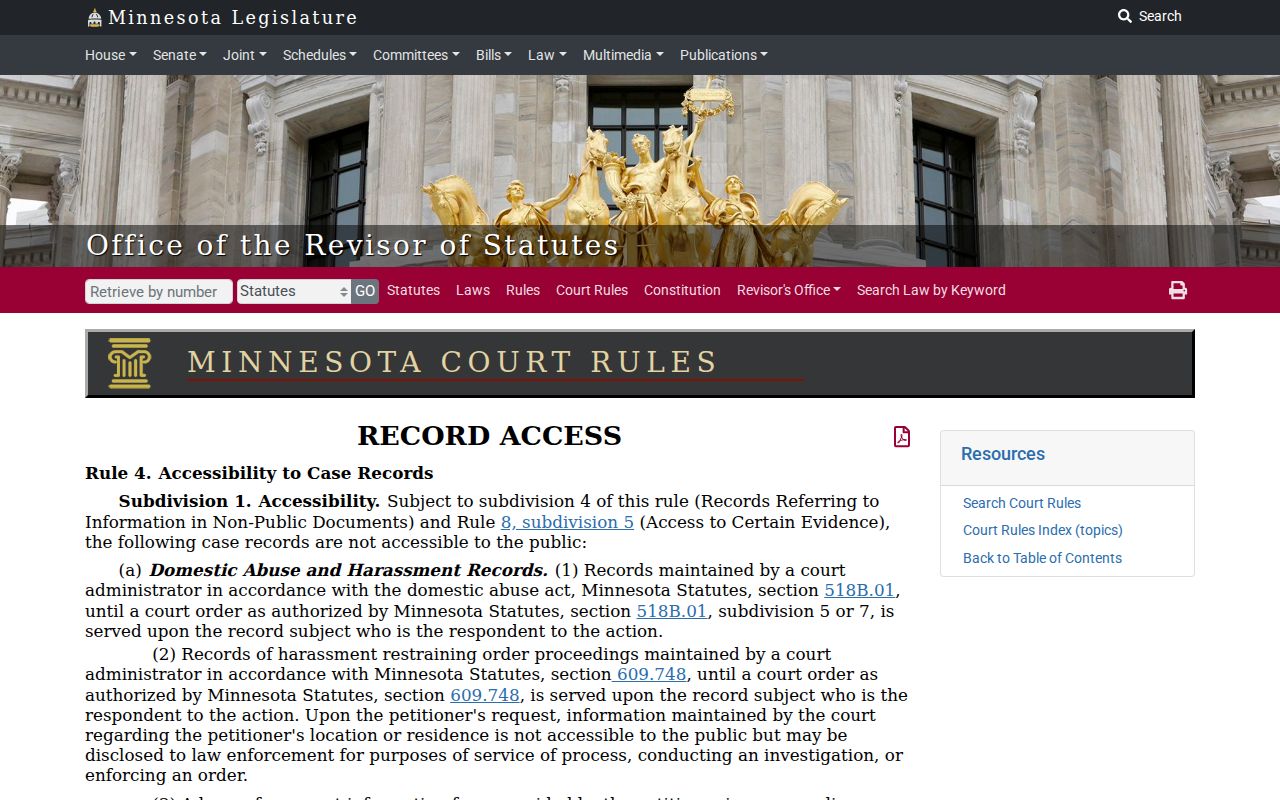
That framework matters here. A civil case can be public while its documents stay off the remote screen.
Hubbard County Civil MCRO Categories
MCRO sorts results into categories. Civil, Family, Probate, and Mental Health are separate filters. Hubbard County District Court handles all of them. Picking the right category keeps unlike files out of a name search. A case that looks civil may really be a family, probate, or mental-health matter. Each area carries its own access limits.
| MCRO category | Hubbard County use | Access caution |
|---|---|---|
| Civil | General civil disputes, judgments, eviction matters, and related filings. | Document availability depends on filing date and document type. |
| Family | Family-case index material where public. | Party-submitted documents and sensitive material can have tighter remote limits. |
| Probate or Mental Health | District Court probate, guardianship, trust, and related matters. | Specific restrictions can apply, particularly to commitment records. |
Minnesota Statutes section 484.01 supports District Court as the local original-jurisdiction court.
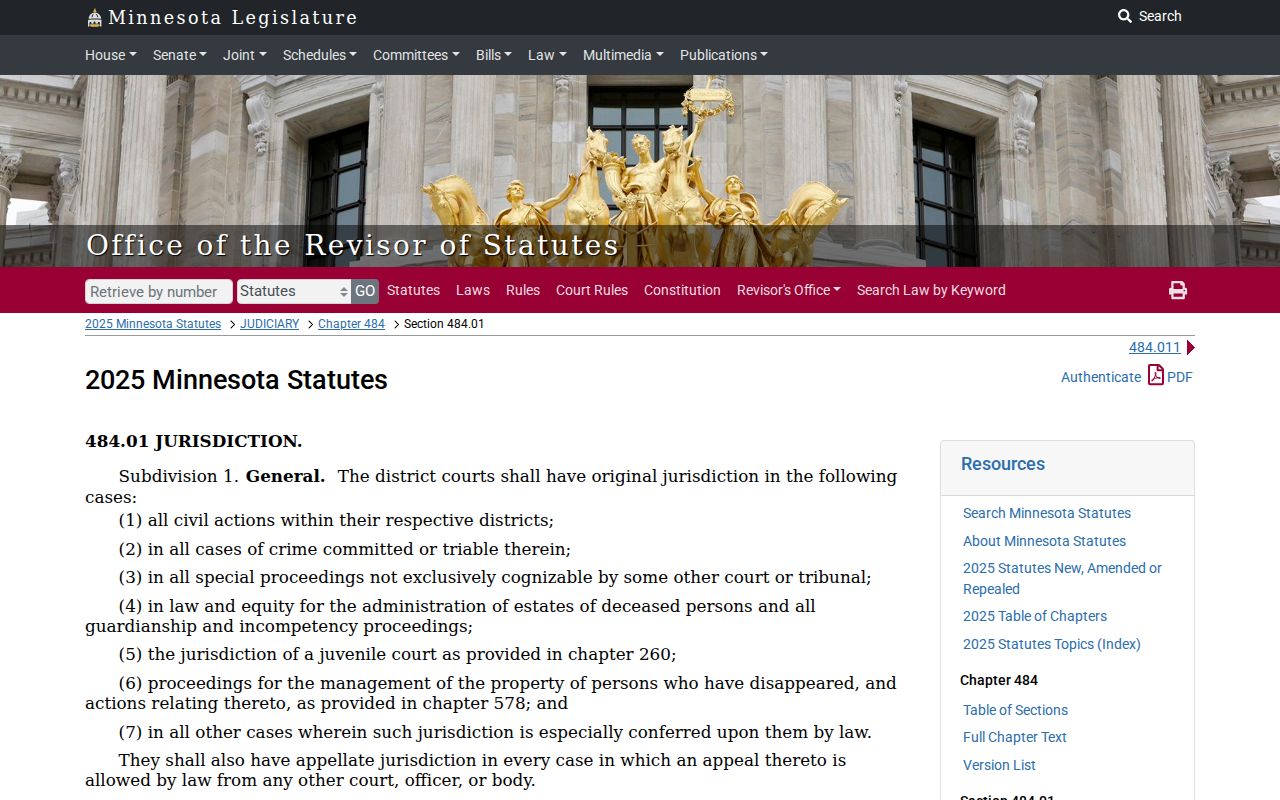
Hubbard County has no separate active county-court or municipal-court civil docket. The District Court handles the civil work.
Inside a Hubbard County Civil Docket
A civil Register of Actions tracks the course of a case. Entries may show the file and the parties. They may show filing events, scheduled hearings, and orders. Judgment activity and other docket actions may appear too. The Register is a case history. It is not a promise that every pleading or exhibit opens from home. A given order may be remote, courthouse-only, or restricted under the public-access rules.
| Case number | A Minnesota court identifier such as the redacted format 29-CV-YY-####. |
|---|---|
| Parties | The named sides to the civil case, which should be checked with the court location and filing date. |
| Filings and events | Recorded complaints, answers, motions, hearings, orders, or related actions when publicly available. |
| Setting | The scheduled date, time, location, hearing type, and connection information when populated. |
| Judgment or order | An entry showing court action; obtain the official document or certified copy when that exact text is required. |
MCRO Document Search pulls remotely accessible documents with a complete case number. Certified copies are another step.
Hubbard Civil Calendar Is Not Judgment
The Hubbard public court calendar lists civil hearing labels such as Eviction Hearing and Order for Protection Hearing. Date, time, location, judicial officer, and connection details follow. It answers one question well: what is set. It is not a judgment roll. A hearing label proves nothing about possession, liability, dismissal, or any final result.
The court posts the calendar PDF each business day and updates it hourly. Printed copies outside courtrooms and in public lobbies may be the most current of all. If a setting is missing or clashes with a notice, call Hubbard County Court Administration at (218) 732-5286. Want the action actually taken? Read the Register of Actions. Find an eligible order, or request an official copy.
Calendar limit: A Hubbard County civil hearing entry reports a scheduled event. It does not replace the court order or judgment.
Civil Case Types on the Docket
Civil work at Hubbard County District Court goes beyond ordinary disputes. The District Court also handles family, probate, juvenile, and mental-health matters. Several have their own MCRO categories. Match the category to the case. Not every local noncriminal file is a plain civil one.
- General civil disputes and judgments.
- Eviction matters, where a calendar date is not the same as the possession result.
- Family matters with controlled remote document access.
- Probate, guardianship, conservatorship, and trust matters handled in District Court.
- Mental-health or commitment matters subject to specialized access limits.
Minnesota Statutes section 487 is part of the official historical county-court source context.
The current Hubbard filing route remains District Court, not a separate county-court docket.
Hubbard County Civil Copy Requests
When you need an order, judgment, or certified record, contact Hubbard County Court Administration. Do not trust an MCRO printout. The office sits in the Hubbard County Courthouse, 301 Court Avenue, Park Rapids, MN 56470, and answers at (218) 732-5286. Statewide copy instructions ask you to name the court and case number. Describe the document and its date. Say whether you need a certification level. Off-site material may take longer than same day.
| Record route | What it provides | Important limit |
|---|---|---|
| MCRO Document Search | Eligible remote documents by complete case number. | Free downloads are not certified copies. |
| Court Administration | Local file questions and certified judicial copies. | Ask about delivery, payment, and availability. |
| State copy request process | Instructions and forms for court-record requests. | Provide an access order when a record is sealed or confidential. |
Minnesota's copy-request forms page gathers the statewide request options for Hubbard County civil court records in one place.
For the details behind a nonparty request, Rule 7 and CON100, the statewide copy-request form spell out the required information and the legal authority a requester may need.
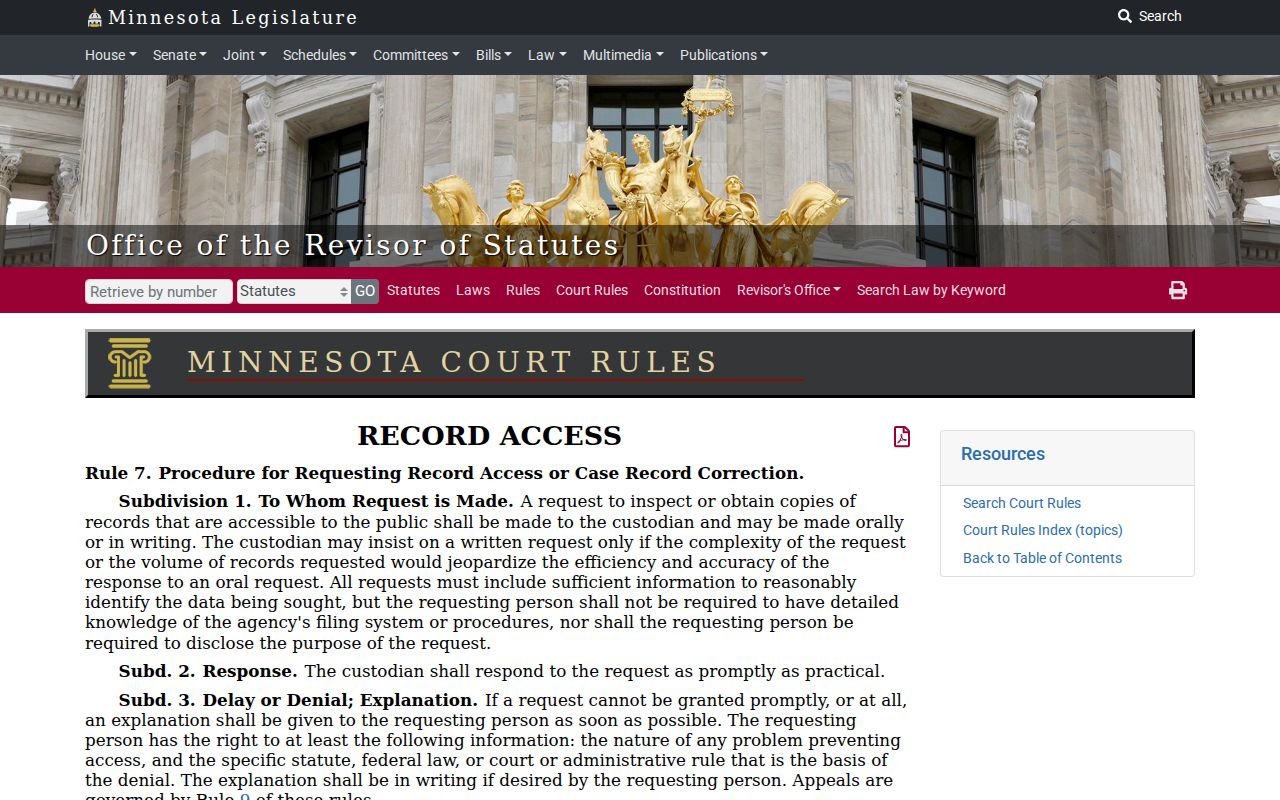
Rule 7 is the proper route for requesting confidential or sealed judicial records. It does not override an access classification.
Civil Docket Settings and Hearings
A setting on the Hubbard County civil docket is a place on the calendar. It is nothing more. The hearing could still move or wrap up early. The Hubbard calendar usually lists the hearing type, time, courtroom, judicial officer, and how to connect. Continuances and later orders can reshape the whole day. Pull the local PDF near the date. Follow whatever case-specific instructions came with your notice.
Court Administration is the office to call when a calendar entry is missing or looks wrong. Hubbard's own court page warns that schedules, courtroom assignments, and judicial assignments all shift. The statewide remote-hearing resources describe the wider framework. Any private meeting link or access detail belongs in the official case notice.
Note: A Civil docket setting does not establish that a continuance, judgment, or dismissal was entered.
Hubbard County Civil Court Records
Court files and county agency files live in different hands. Orders, the Register of Actions, the court calendar, and certified copies all sit with the Judicial Branch and Hubbard County Court Administration. A police report or an investigative record is not a civil court docket record. Hubbard County runs its own data-request process for county-held data, and it points court-date and court-fine questions straight to Court Administration. Hubbard County Sheriff records information spells out the separate law-enforcement route.
Knowing the right custodian keeps a county data request or a sheriff inquiry from being read as a court-record request. They are not the same thing.
Civil Docket Access Rules
Hubbard County civil dockets answer to the Minnesota Rules of Public Access to Records of the Judicial Branch. Rule 8 controls remote access. A Register of Actions can stay searchable. The documents behind it may be courthouse-only or protected. Family cases, civil commitment, domestic abuse, harassment, and juvenile files carry tighter limits. Protected identifiers, exhibits, and certain document categories stay off remote display too.
Access distinction:
Rule 8 explains limits on remote access and protected data.
Rule 7 describes requests for confidential or sealed judicial records.
For a public record unavailable online, use a courthouse terminal or ask Court Administration about the appropriate access route.
This request runs on judicial access rules, not the state's county-government data-practices law. If a document is missing from remote view, treat that as a restriction, not a clue about private facts.
Hubbard County Civil Federal Records
A federal civil case never lands in the Hubbard County District Court docket. Federal filings go to the U.S. District Court for the District of Minnesota. They ride on federal PACER access. The state-court Register of Actions, by contrast, stays in MCRO. Bankruptcy and other federal matters confirm this split. A federal agency or federal jurisdiction may have been involved. Verify which court took the filing before picking a system. PACER Case Search Only registration opens one federal door. It does not replace MCRO.
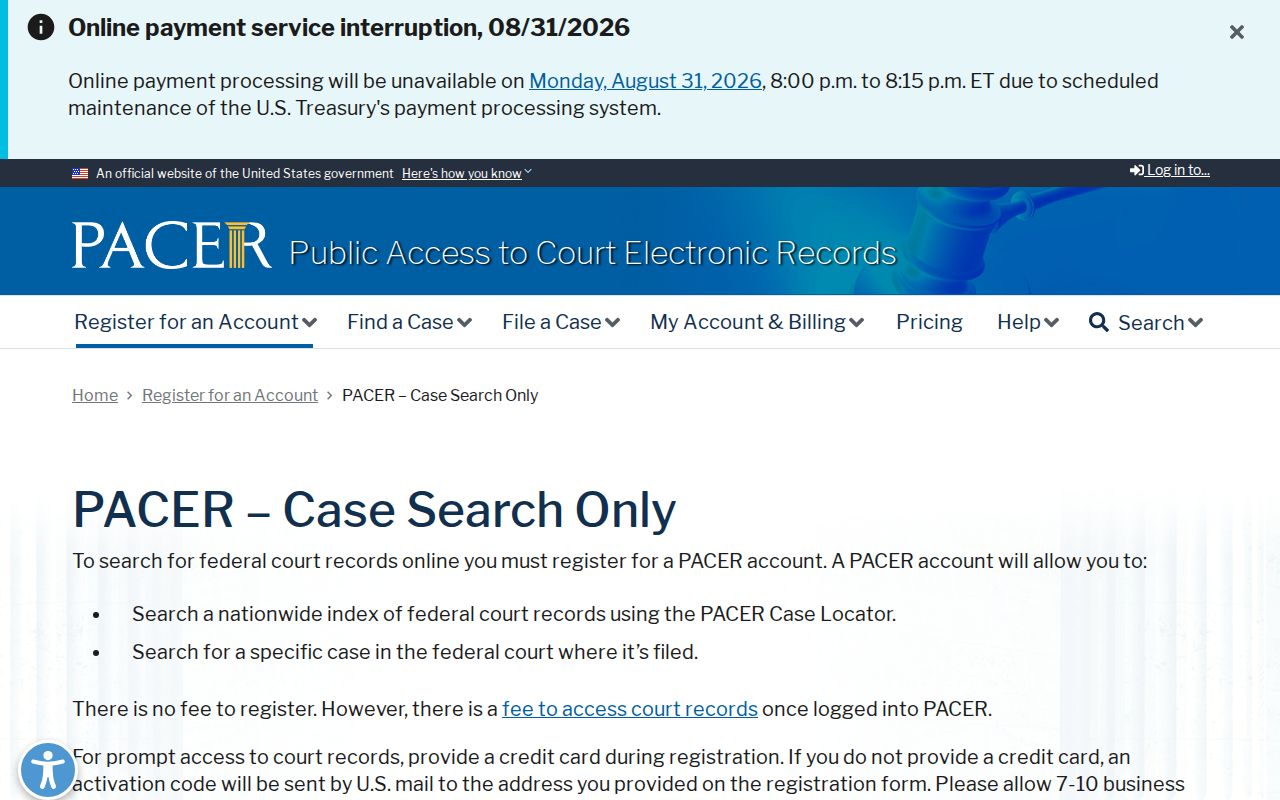
For Hubbard County state civil files, start with MCRO and Court Administration. Move to federal access only after confirming that a federal court holds the record.